
The circular economy is changing the way businesses think about waste, resources and growth. Here’s how it works, why it matters, and the companies proving it can be incredibly successful
For decades, much of the global economy has worked in a simple way: take raw materials, make products, use them and throw them away. It has fuelled incredible innovation, but it has also created mountains of waste and increasing pressure on the world’s natural resources.
The circular economy offers a different way of thinking. Rather than seeing products as disposable, it aims to keep materials in use for as long as possible through designing for durability, repair, refurbishment, reuse and, ultimately, recycling. According to the Ellen MacArthur Foundation, one of the world’s leading voices on circularity, a circular economy is designed to eliminate waste and pollution, keep products and materials in use and regenerate natural systems. These principles have become the foundation of a growing movement embraced by governments, entrepreneurs and some of the world’s biggest businesses.
From niche idea to global movement
While the idea has roots stretching back to industrial ecology and the work of pioneers such as Walter Stahel during the 1970s and 1980s, the concept entered the mainstream after the Ellen MacArthur Foundation began championing it in 2010. Since then, organisations including the European Union and the Organisation for Economic Co-operation and Development (OECD) have promoted circular thinking as an important way of reducing waste, improving resource efficiency and creating more resilient economies.
Increasingly, businesses are discovering that circularity is not simply about being greener. It can also unlock new revenue streams, reduce dependence on volatile raw material prices and build stronger relationships with customers through repair, resale and reuse.
Few people explain this better than circular economy strategist and speaker Harald Friedl. Friedl advises organisations around the world on circular business models and sustainable innovation, making him one of the most respected voices on the subject.
In his recent article, 5 Circular Economy Unicorns: Who’s Next?, Friedl neatly captures the shift in mindset that defines the circular economy: ‘Waste is not a problem. It is a business model waiting for the right person to see it.’
It is a simple idea, but one that increasingly successful businesses are turning into reality.
Five companies showing circularity can be profitable
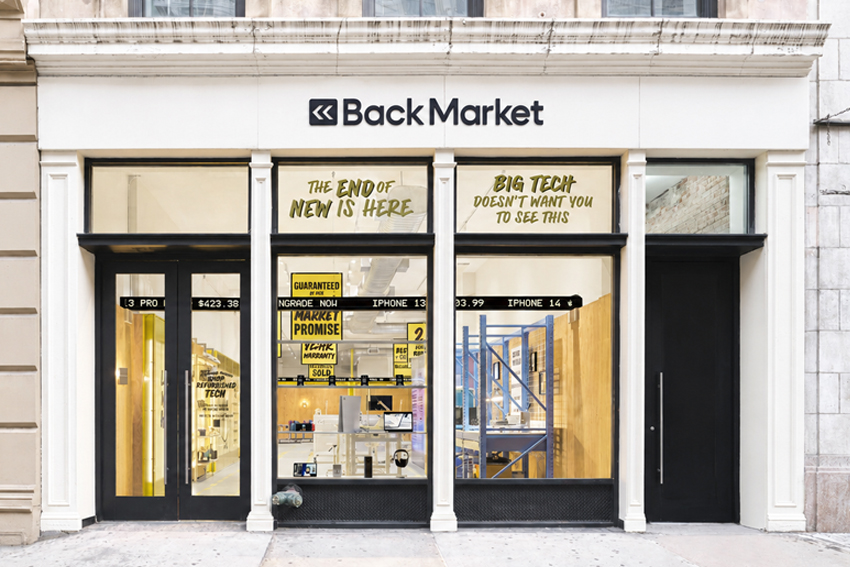
Back Market
The French refurbished electronics marketplace has transformed second-hand smartphones and laptops into desirable products. Rather than encouraging consumers to buy new, Back Market extends the life of existing devices through professional refurbishment.
As Friedl observes, the company didn’t simply recycle electronics – it changed consumer perceptions. Refurbished products became something people actively wanted rather than settled for.
Vinted
What began as a small Lithuanian start-up has grown into Europe’s largest second-hand fashion marketplace. By making buying and selling pre-owned clothing easy and trustworthy, Vinted has helped millions of garments stay in circulation for longer instead of ending up in landfill.
Too Good To Go
Every day, perfectly edible food goes unsold. Too Good To Go connects restaurants, supermarkets and bakeries with nearby customers, allowing surplus food to be sold at reduced prices before it becomes waste. According to the company, hundreds of millions of meals have already been saved through the platform.
Vestiaire Collective
Luxury fashion resale has become a thriving market thanks to Vestiaire Collective. By authenticating pre-owned designer goods, the platform demonstrates that products built to last can continue creating value for decades. As Friedl notes, longevity itself becomes part of the product’s appeal.
Redwood Materials
Founded by former Tesla Chief Technology Officer JB Straubel, Redwood Materials recovers valuable minerals from used electric vehicle batteries so they can be used again in new batteries. Instead of continually extracting finite resources, the company closes the loop on some of the world’s most valuable materials.
Why circular thinking matters to all of us
Although these businesses operate in very different industries, they all started with the same question: what still has value that everyone else has overlooked?
As Friedl writes: “The circular economy is not an environmental agenda. It is a value agenda.”
That perspective helps explain why circular economy businesses are attracting billions of pounds in investment. They reduce waste, but they also uncover new ways of creating value from products and materials already in circulation.
For consumers, embracing circularity might simply mean repairing rather than replacing, buying refurbished technology or choosing second-hand fashion. For businesses, it can involve redesigning products for longevity or creating services that keep valuable materials in use.
Viewed through etheco’s Four Ps, the circular economy delivers benefits across every measure. It supports People by creating new jobs and more affordable products, helps protect the Planet by reducing waste and resource extraction, can be kinder to your Pocket through lower costs and longer-lasting goods, and demonstrates strong Performance by showing that sustainability and commercial success can go hand in hand.
Sometimes, the most valuable resource isn’t something new at all. It’s simply seeing existing materials in a different way.
References
Ellen MacArthur Foundation (2025). The Circular Economy: Definition and Principles.
Ellen MacArthur Foundation (2013). Towards the Circular Economy.
European Parliament (2023). Circular economy: definition, importance and benefits.
OECD (2020). The Circular Economy in Cities and Regions.
Harald Friedl (2026). 5 Circular Economy Unicorns: Who’s Next?