

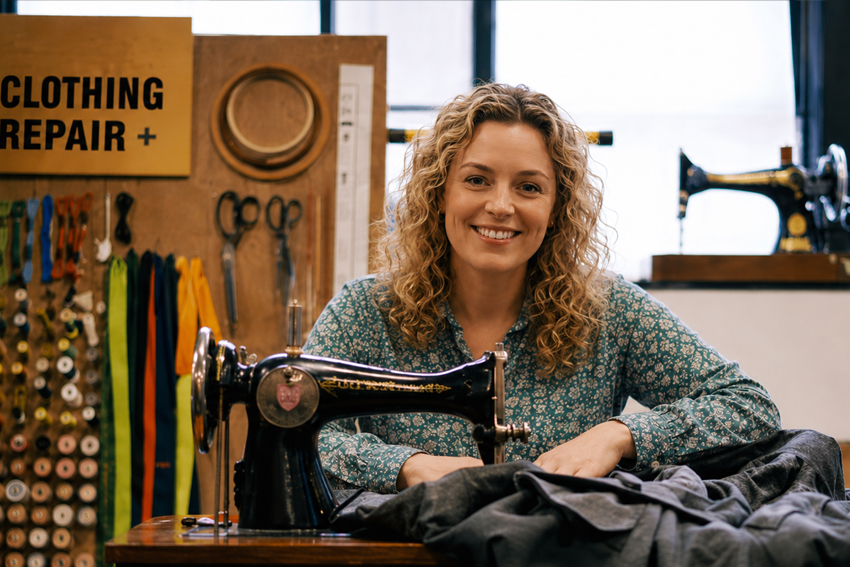
A broken zip, a worn-down heel, a moth hole in your favourite jumper – these things don’t have to mean the end. With the right repair, the clothes and accessories you love can last years longer. Here’s how to make it happen
Why repair?
We live in a culture that makes it almost too easy to buy new. But that convenience comes at a cost. The fashion industry is one of the world’s most polluting, and in the UK alone, around 300,000 tonnes of clothing ends up in household bins each year, according to WRAP. Most of it could have been worn much longer with just a little care.
Choosing to repair rather than replace is one of the most effective things you can do as a consumer. It’s not about making do. It’s about recognising that a good pair of shoes or a well-made coat is worth keeping going.
What can be repaired?
More than you might think. Professional repairers across the UK can handle clothing (zip replacements, split seams, invisible mending, moth holes), shoes and boots (resoling, re–heeling, leather restoration), handbags and accessories (piping, stitching, zip and leather repair), denim, and occasion wear alterations. Visible mending techniques like embroidery and sashiko stitching have also grown in popularity, turning a repair into a deliberate design feature.
How to find a repairer in the UK
Finding a good repairer has become much easier. Here are a few of the best options:
- The Seam – rated 4.9 stars from over 7,000 customers, this UK-wide platform connects you with tailors, seamstresses, cobblers and bag restorers. Upload a photo, get a quote within 48 hours, then drop off locally or send by post.
- Sojo – an app-based service that matches you with local tailors for pickup and drop-off. Partnered with Marks & Spencer.
- Timpson – hundreds of UK locations with in-house tailors for clothing alterations and shoe repairs. Often the most convenient option for straightforward jobs.
A simple Google search with your postcode will often surface brilliant local independents too – and they’re frequently the best value of all.
How repairing scores on etheco’s 4Ps
Planet – WRAP estimates that extending the life of a garment by just nine months reduces its carbon, water and waste footprints by around 20 to 30 per cent. Every item repaired rather than discarded avoids the environmental cost of producing a new one.
People – Choosing to repair supports skilled local workers – tailors, cobblers, leather restorers – many of them independent. It also reduces demand for a fast fashion supply chain that frequently depends on exploitative labour practices.
Pocket – A shoe resole costs £25–40; replacing the boots might be £150. A zip replacement runs to £15–25. Invisible mending on cashmere typically costs around £30. Repair is almost always the more economical choice when you factor in replacement cost.
Performance – Quality repairs, done well, are often virtually invisible. The Seam’s customers consistently describe items returned looking as good as new. A resoled shoe will frequently grip better than its worn original – and a properly altered garment will fit and feel better too.
Tips for getting the best results
- Act early. A small tear or worn heel is cheaper to fix than one left to worsen.
- Take clear photos from multiple angles – repair platforms use these to generate quotes.
- Keep spare buttons, thread or fabric swatches. They make colour-matching much easier.
- Consider visible mending. Embroidery and sashiko darning can turn a repair into something distinctive.
Explore the etheco directory
Looking for ethical and eco-friendly businesses? Browse the etheco directory to find businesses that share our values.
References
Ellen MacArthur Foundation (2017), A New Textiles Economy: Redesigning Fashion’s Future.
WRAP (2017), Extending the Life of Clothes: Environmental Impact Study.
WRAP (2022), Textiles – UK Clothing and Textiles Statistics.