
Learn how to spot greenwashing with our guide to the six most common signs to look out for when choosing products, helping you make more informed, confident decisions
Greenwashing is becoming increasingly common, and knowing how to spot it can help you make more informed choices. Many brands are exploring sustainability, but not all claims are as clear or meaningful as they seem. In this guide, we’ll walk you through six of the most common signs of greenwashing, so you can navigate claims with confidence and curiosity.
1. Vague or undefined claims
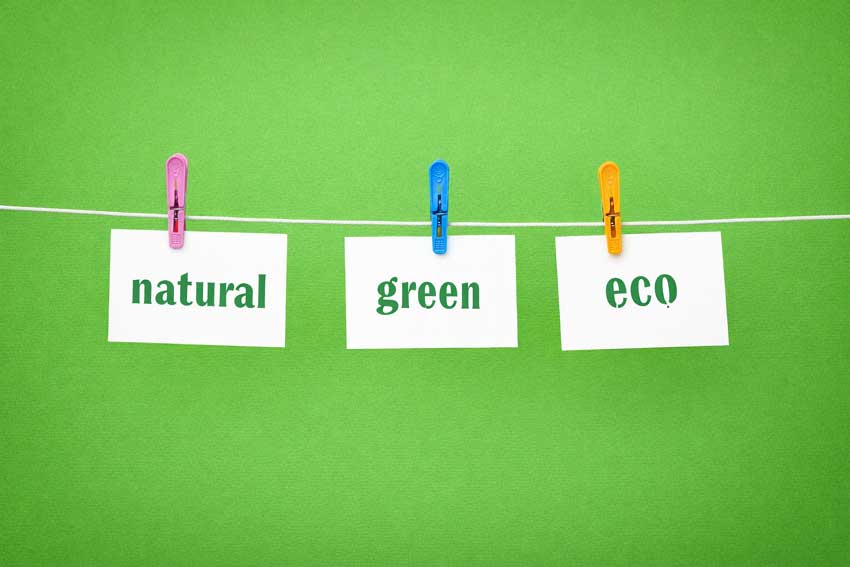
One of the most common signs of greenwashing is the use of broad, undefined terms such as ‘eco-friendly’, ‘green’ or ‘natural’.
These phrases can sound reassuring, but without explanation, they don’t tell you very much. What does ‘eco-friendly’ actually mean in this context? Does it refer to materials, production, packaging or something else entirely?
Look for brands that:
- Clearly explain what their claims refer to
- Provide specific details (e.g. ‘made from 70 per cent recycled cotton’)
- Avoid relying on general language alone
If a claim feels unclear, it’s often worth taking a closer look.
2. Lack of evidence or proof
Sustainability claims should be backed up with evidence. If a brand says a product is better for the environment, there should be information to support that.
This might include:
- Certifications from recognised organisations
- Data about emissions, materials or sourcing
- Links to reports or further reading
When this information is missing, it can be difficult to understand what sits behind the claim. According to the European Commission (2020), over half of environmental claims reviewed in the EU were found to be vague, misleading or unsubstantiated.
Transparency doesn’t have to mean complexity, but it should offer enough detail for you to explore further if you choose to.
3. Highlighting one positive while ignoring the bigger picture
Sometimes a product is presented as sustainable because of one positive feature, while other impacts are not mentioned.
For example, a product might:
- Use recycled packaging but be made from resource-intensive materials
- Be labelled ‘organic’ while having a high carbon footprint
- Promote one improvement without addressing wider supply chain practices
This doesn’t mean the positive feature isn’t meaningful. Rather, it’s about recognising that sustainability is often multi-layered. Indeed, it’s why etheco’s ratings system reflects this fact, drawing on what is known as the 4Ps – people, planet, pocket and performance – to better assess the true ethical merits of a product.
4. Irrelevant or misleading claims
Some claims are technically true but not particularly helpful. For example, a product might be labelled ‘CFC-free’ (free from chlorofluorocarbons), even though these substances have been banned for decades in many countries. While accurate, the claim doesn’t distinguish the product in a meaningful way.
Similarly, language can sometimes be used in a way that suggests more than it delivers. Words like ‘clean’ or ‘conscious’ can carry positive associations without clear definitions.
When reading claims, it can be useful to ask:
- Is this information meaningful or expected?
- Does it help me compare this product to others?
- Is anything important missing?
5. Overly complex or hard-to-access information
Transparency should feel accessible. If information is buried in difficult-to-find reports, written in highly technical language or spread across multiple pages, it can make it harder to understand what’s really being claimed.
Clear communication often includes:
- Plain language explanations
- Easy-to-find sustainability pages
- Summaries alongside more detailed reports
The aim isn’t to simplify complex issues too much, but to make them easier to navigate. This mirrors the etheco approach – clarity and accessibility help create a more informed and inclusive conversation.
6. Use of self-created labels or imagery
Visual cues can strongly influence how we interpret products. Symbols such as green leaves, earth icons or badges can suggest environmental credibility, even when they are not linked to recognised standards.
Some brands also create their own ‘certifications’ or labels, which may not be independently verified.
When you see a label, it can help to check:
- Is it from a recognised third-party organisation?
- Can I easily find what the label represents?
- Is there independent verification behind it?
Trusted certifications usually have clear criteria and are managed by external bodies rather than the brand itself.
A final thought on building confidence
Learning how to spot greenwashing is less about catching brands out and more about feeling confident in the choices you make. It’s worth remembering that sustainability is a complex and evolving space. Many organisations are still improving how they communicate their impact, and not every unclear claim is intentionally misleading. At the same time, asking thoughtful questions can help encourage greater transparency across the board.
At etheco, we believe that better information leads to better decisions. By understanding these six common signs of greenwashing, you can approach sustainability claims with a balanced perspective – curious, informed and open to learning more.