

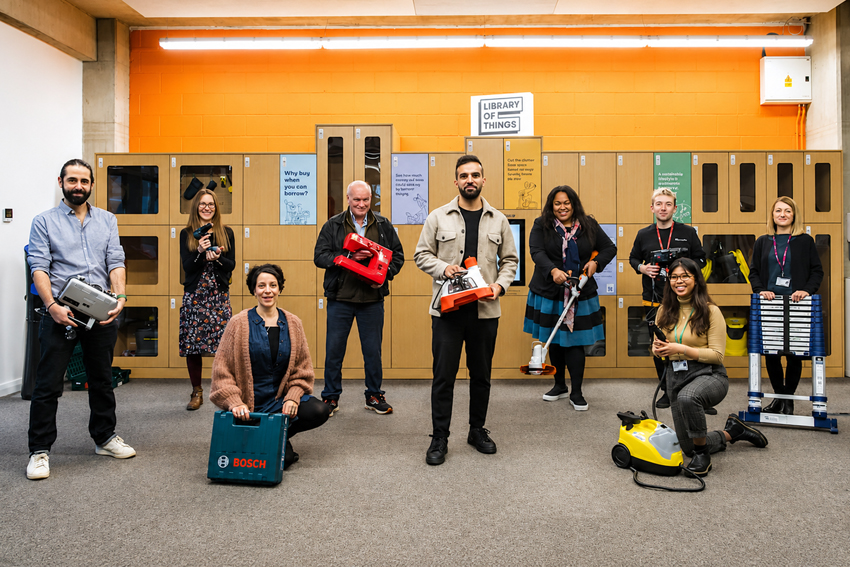
From power tools to party dresses, renting everyday items is becoming a smarter way to save money, reduce waste and enjoy access over ownership without compromising on convenience
For decades, we’ve been encouraged to buy more. New gadgets, new tools, new outfits – many of them used only a handful of times before being tucked away in a cupboard, loft or garage.
But a quiet shift is taking place. Rather than asking, ‘Should I buy this?’, more people are asking, ‘Can I rent it instead?’
From pressure washers and carpet cleaners to cameras, laptops and designer dresses, renting has become easier, more affordable and far more mainstream. Thanks to platforms such as Hygglo and Library of Things, as well as fashion rental services including By Rotation and HURR, access is increasingly replacing ownership.
It’s a change that’s good news for our wallets, our homes and, potentially, the planet too.
The rise of borrowing over buying
Think about the last time you used a hedge trimmer, tile cutter or pressure washer. Unless you’re a keen DIY enthusiast, chances are it wasn’t very often.
Many household items are only needed once or twice a year, yet they can cost hundreds of pounds to buy and take up valuable storage space. Renting allows people to access high-quality equipment only when they need it.
Swedish-founded platform Hygglo connects people who own useful items with those who want to borrow them, creating a peer-to-peer marketplace for everything from camping equipment and paddleboards to cameras and power tools.
Meanwhile, the UK’s Library of Things has built a growing network where people can borrow everyday items including carpet cleaners, drills, sewing machines, fans, projectors and gardening equipment for a fraction of the purchase price.
The concept has become increasingly popular as households look for practical ways to reduce spending. Research from Barclaycard Payments and Development Economics found that one in ten people now choose to rent rather than buy new products, with the cost-of-living crisis and growing interest in more sustainable lifestyles helping to drive the trend.
As well as saving money, renting allows people to try products before committing to a purchase, avoiding expensive mistakes and reducing the number of barely-used items gathering dust at home.
Fashion joins the rental revolution
Perhaps nowhere has renting evolved faster than in fashion.
Buying an outfit for a single wedding, party or black-tie event is becoming less appealing when stylish alternatives can be rented for a fraction of the retail price.
Platforms including By Rotation and HURR now give people access to thousands of dresses, handbags and designer pieces, making premium fashion available without the long-term commitment.
For many users, the appeal isn’t simply financial. Renting offers the opportunity to experiment with different styles while reducing demand for newly manufactured clothing.
Academic research published in Sustainability found that consumers with greater environmental awareness are significantly more likely to embrace clothing rental services, seeing them as a practical way to reduce the environmental impact associated with fast fashion.
However, it’s worth recognising that rental isn’t automatically the most sustainable option in every situation. Transport, cleaning and packaging all have an environmental footprint. Organisations including the Ellen MacArthur Foundation suggest the greatest benefits come when garments are rented repeatedly, cared for responsibly and used to replace new purchases rather than simply increasing overall consumption.
A circular way of thinking
Renting reflects one of the central principles of the circular economy: keeping products in use for longer and getting the maximum value from the resources already used to make them.
Instead of every household owning an infrequently used drill, pressure washer or carpet cleaner, one well-maintained item can serve dozens or even hundreds of people throughout its lifetime.
That means fewer products need to be manufactured, fewer raw materials extracted and less waste created when items eventually reach the end of their useful life.
It’s also helping to reshape the way we think about ownership. For many products, what we really need isn’t to own something – it’s simply to use it for a short period.
Renting isn’t about giving things up
Choosing to rent doesn’t mean sacrificing convenience or quality. In many cases, it offers more flexibility, lower costs and access to better products than we might otherwise afford.
Whether it’s borrowing a pressure washer for the weekend, hiring a fan during a summer heatwave or renting a designer outfit for a special occasion, access over ownership is becoming an increasingly attractive option.
At etheco, we see renting as another example of thoughtful consumption. It’s not about perfection or never buying anything new. It’s about asking one simple question before making a purchase: do I really need to own this?
Sometimes, borrowing could be the smarter choice.
Explore the etheco directory
Looking for ethical and eco-friendly businesses? Browse the etheco directory to find businesses that share our values.
References
Barclaycard Payments & Development Economics (2024), research on UK rental and second-hand shopping trends.
Chi, T. et al. (2023). Renting Rather than Buying Apparel: U.S. Consumer Intentions toward Apparel Rental Services. Sustainability.
Ellen MacArthur Foundation. Clothing rental for users and retailers.
Fashion Revolution. How sustainable is rental fashion?