

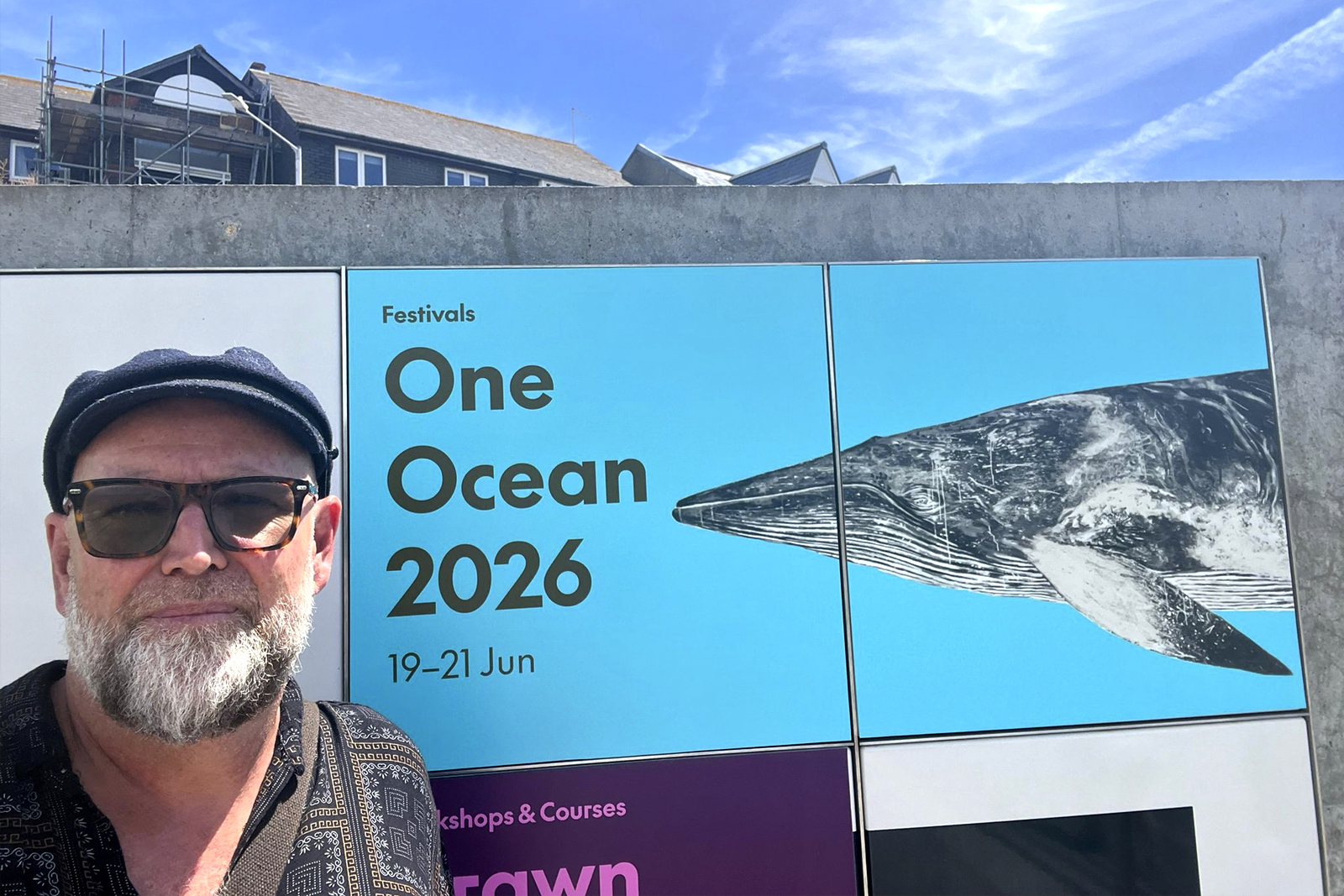
At Turner Contemporary’s first One Ocean summit, whilst attending a talk ‘speaking with the Ocean’, it became obvious to Jason Hollingsworth that it is about time we listened and gave nature a voice of its own
Down the coast in Margate, Turner Contemporary hosted One Ocean 2026, a free weekend of talks and workshops and the first ocean summit of its kind in Thanet. The session I’d circled was Speaking with the Ocean, with curator Emma Lewis in conversation with Christiane Bosman of the Embassy of the North Sea and environmental justice technologist Joycelyn Longdon. Their question sounds simple but isn’t: how might we relate to the ocean not as a resource to be used up, but as a living world with interests of its own?
Giving nature a voice
The big idea came from the Rights of Nature movement. In 2017, after a 140-year struggle by the Whanganui iwi tribe, New Zealand granted the Whanganui River the legal status of a person, with human guardians appointed to speak on its behalf. Harming the river is now, in law, closer to harming a person. Bosman’s Embassy works from an equally bold principle – that the North Sea owns itself – and wants the sea to become a political voice in its own right.
And it isn’t only happening overseas, or only to rivers. In 2022 the ethical brand Faith in Nature – which we feature in the etheco directory – became the first company in the world to appoint Nature to its board of directors, with a guardian legally bound to speak for the natural world on major decisions. It’s a model we admire so much that etheco intends to put nature on our own board too – a standing reminder that every decision we make affects a world that can’t yet answer back.
From Margate to the Wye
Sitting there, I kept thinking back to April, when I joined the SOS Whitstable march, walking with hundreds of others from Tankerton to Southern Water’s Swalecliffe works to demand an end to sewage pollution. We were, in effect, lending our voices to a sea that has none. But imagine if our rivers and seas held legal rights, as the Whanganui does. A polluter wouldn’t just face a fine to be absorbed as a cost of business – they would be answerable to the river itself.
Encouragingly, the UK is starting down that road. In 2025 the River Ouse in Sussex became the first river in the country to have its rights recognised, after Lewes District Council adopted a charter. This May the River Wye went further – a UK-first charter recognising the river’s rights to flow, to biodiversity, to be free from pollution and to be represented, across its entire 130-mile catchment. An ecologist now holds a formal voting seat speaking for the Wye, and a private member’s bill on the rights of nature is before the House of Lords.
Through the etheco lens
At etheco we weigh decisions against our 4Ps. Two felt especially alive in that room:
Planet: Treating the sea as a living whole, rather than a bundle of resources, reframes every choice we make about it – and giving nature a legal voice could finally hold polluters to account.
People: Justice for ecosystems and justice for communities go together; the loudest polluters and the quietest voices are rarely the same people.
I went to Margate thinking I’d learn how to better protect the sea. I left wondering whether, before long, the sea might have a thing or two to say to us.
References
Turner Contemporary (2026), One Ocean 2026 programme, Margate, 19–21 June 2026
Embassy of the North Sea, About / Compendium Rights of Nature
Te Awa Tupua (Whanganui River Claims Settlement) Act 2017, New Zealand
Faith in Nature (2022), Faith In Nature Legally Appoints ‘Nature’ to its Board of Directors
Oceanographic (2026), River Wye granted legal rights in UK-first charter
SOS Whitstable / etheco (2026), Coming together to end sewage pollution