

etheco founder Jason Hollingsworth reflects on a weekend in West Bay, Dorset, where art, dance, repair and community came together to explore the hidden cost of our clothes
A different way of looking at fashion
I recently spent a weekend at West Bay in Dorset as part of Earth My Earth, a community-led environmental arts project hosted by Bridport’s Fingerprint Dance. I was there to help run a children’s workshop, but I came away thinking much more deeply about something most of us encounter every day: the clothes in our wardrobes.
Created by Greek company Kynourio Soma and first staged in Arcadia in 2025, the Dorset edition focused on textile waste, fast fashion and waste colonialism. What struck me was how the event avoided simply telling people that they consume too much. Instead, it invited us to look at our clothes differently – through creativity, conversation, movement and practical action.
Making something from nothing
One of my highlights was co-facilitating ‘Scarecrow Couture’ with artist Rachel Dickens. The idea was simple: give children unwanted clothes and textiles and see what they could turn them into.
There was something wonderfully liberating about watching old garments become colourful, characterful figures. Clothes that might otherwise have been regarded as rubbish suddenly had a new purpose. The children were also exploring the journeys our clothes take and considering what happens when we no longer want them.
For me, that connected with ethical living. We often think about what we buy. But another question is just as important: what can we do with what we already have?
Repair, swap, reuse
Across the weekend, there were plenty of practical answers. A Repair Café offered help with repairing, re-hemming and re-fashioning clothes. Clothes swaps gave people the chance to pass on garments, shoes and accessories they no longer wore, while a swimwear swap extended the same idea to swimming kit.
These are small actions, but collectively they can change the way we think about ownership. If something can be repaired, swapped, shared or creatively transformed, perhaps its useful life is not over when we decide we have finished with it.
The scale of textile waste makes that shift worth thinking about. WRAP estimates that 711,000 tonnes of used textiles enter UK residual waste each year, with almost half – 49 per cent – going straight in the bin. The Earth My Earth programme also highlighted waste colonialism, including the journey of second-hand clothing to Accra’s Kantamanto market, where The Or Foundation estimates around 15 million garments arrive each week, with about 40 per cent leaving as waste.
Art can change the conversation
The weekend’s main performance, Garb (Age), brought together three diverse dance groups to explore how we buy, accumulate and waste clothes. Watching performers use layers of clothing to explore identity was a reminder that what we wear is about much more than fabric. Our clothes can express who we are, carry memories and become part of our sense of self.
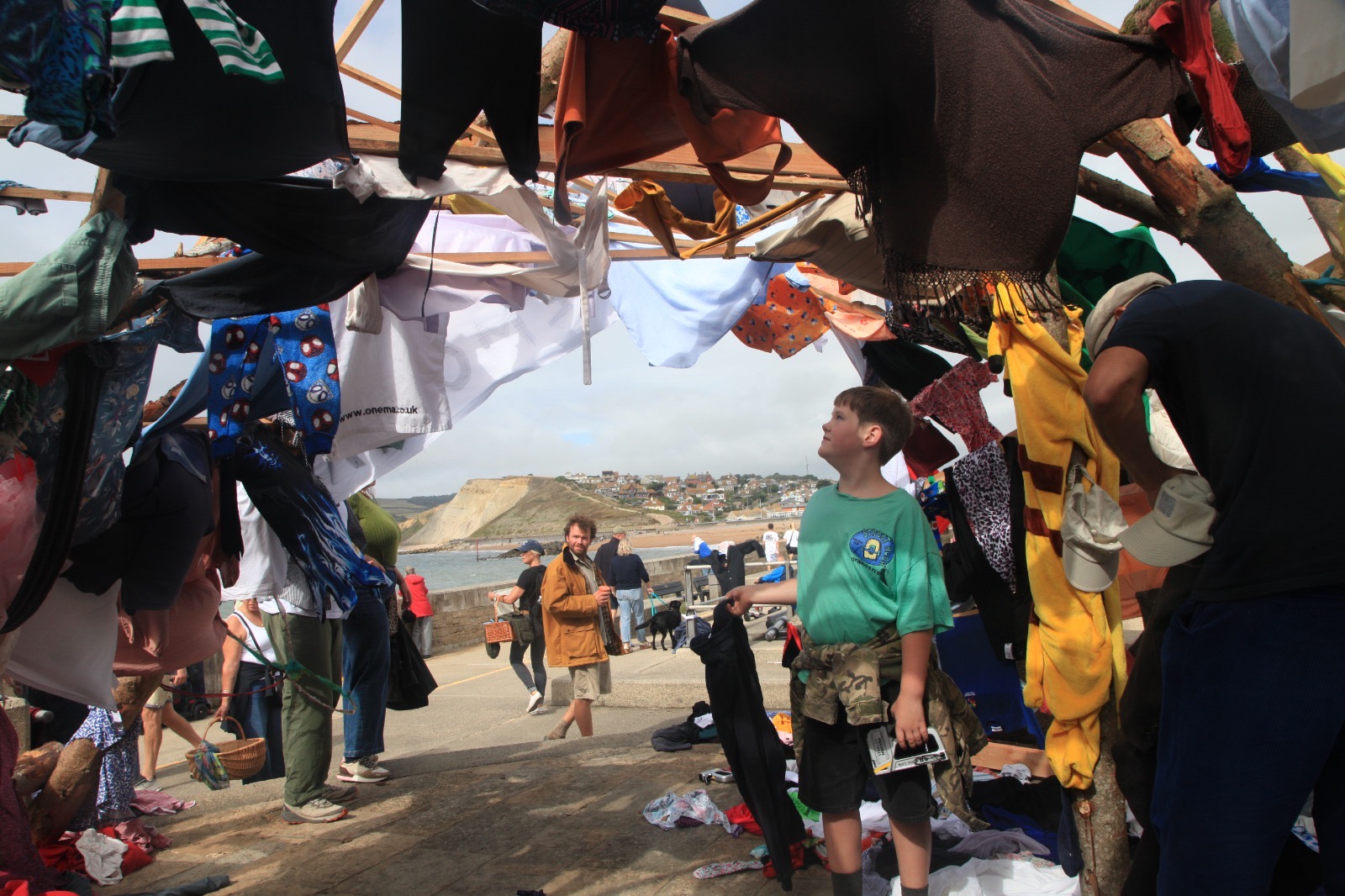
There was also a ‘Fashion Memorial’ on the Jurassic Pier, an open wooden structure that people could fill with unwanted clothes to create a collective textile installation. Alongside it were exhibitions, including Clothes My Clothes, which brought together cherished old garments and the stories behind them.
A weekend with a lasting message
What stayed with me most was the sense of possibility. Earth My Earth brought together young people, dancers, older residents, makers, food growers, swimmers and volunteers, and gave everyone a role to play.
There is no single answer to textile waste. We can buy less, choose more carefully, repair what we own, swap things with others and find creative ways to give unwanted clothes another life.